

Focus Aesthetics is inside both clinics

Common questions
Short answer
Yes — Omega-3 is anti-inflammatory and supplements the oily layer of the tear film, which is why it is one of the four things we prescribe as a set. But the form and the dose decide whether it does anything, and plenty of supplements on a shop shelf fall short on one or both.
Three things, and all three matter. A re-esterified triglyceride (rTG) form, which is absorbed and used far better than the cheaper ethyl ester form. A 3:1 ratio of EPA to DHA, which is the ratio clinical studies have found effective for dry eye. And at least 2000mg a day, which is the threshold for the anti-inflammatory effect.
Labels often do not say which form the oil is in. That is the single most common reason a supplement someone has taken faithfully for months has done nothing.
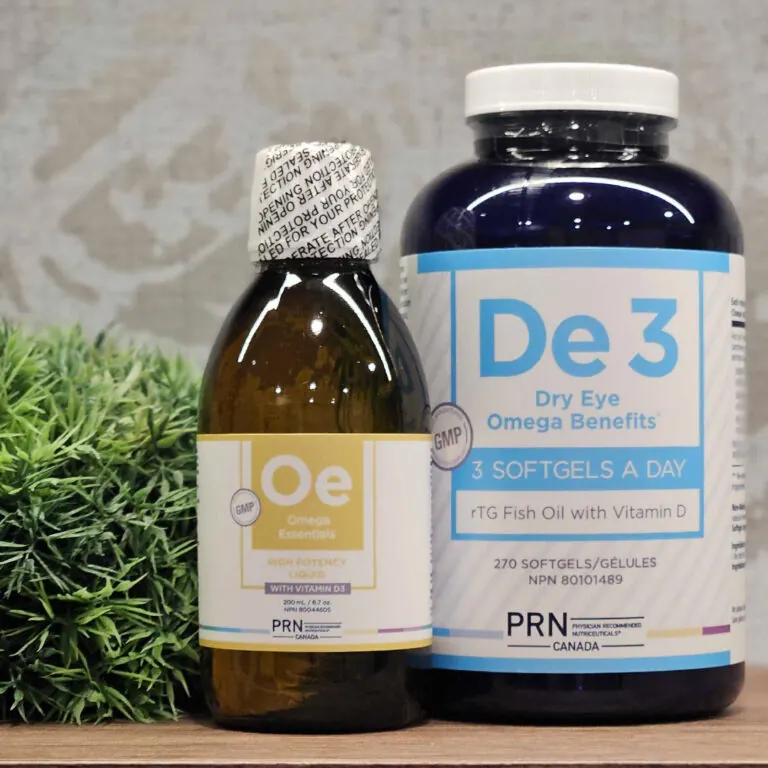
Cold water fish oils contain the long-chain Omega-3s, EPA and DHA, which are the ones shown to relieve dry eye. Plant sources provide short-chain ALA, and the body converts only a small fraction of it into EPA and DHA — so you would need to consume a great deal to end up with an equivalent amount.
If you cannot take fish because of allergy or diet, algae-based supplements are a good alternative provided they contain both EPA and DHA.
Not realistically. Reaching the dose that helps dry eye would mean roughly seven servings of salmon or thirty-seven cans of tuna a week, and mercury levels make that a bad idea.
More omega is not better, either. Omega-6 and Omega-9 are already plentiful in a typical Alberta diet — fried foods, corn, vegetable oil, poultry — and too much of them is pro-inflammatory, which works against you.
Omega-3 thins the blood, so it does not mix with blood-thinning medication, and it is worth a word with your physician or pharmacist if you have a chronic condition. Some brands also contain synthetic Vitamin E, which carries its own concerns.
We carry the form we recommend in clinic, and a month of it is included in the full dry eye treatment plan.
Where treatment starts
Visit one of our experienced optometrists to get started on your journey to true dry eye relief. The exam is what separates blocked oil glands from allergy, from lid margin inflammation, from everything else that produces the same symptoms — and it is what tells us whether the treatments we offer will help you.
Related questions
Whether any of this applies to your eyes specifically is a question an assessment answers in one appointment.